Osteoporosis — from bone strength to fracture prevention.
What osteoporosis actually is, how it's diagnosed, and how it's treated — including the bone-building (anabolic) therapies and goal-directed sequencing that get high-risk patients to a safer place — written by the endocrinologists who manage it every day, with every recommendation graded honestly by the evidence.
"I broke a bone after 50 — does that mean I have osteoporosis?"
Explore this pathway →Where are you right now?
However you found this page, begin with the situation that sounds like yours.
I was just diagnosed
What a T-score of −2.5 actually means, and what usually happens next — in plain terms.
Understand the basics →I just broke a bone
Why a fracture after 50 is a sentinel event, and why the next 1–2 years matter most.
See what to do →I've been offered medication
Bisphosphonate, denosumab, or a bone-building drug — an honest look at how they differ.
Compare the options →I want to do it "naturally"
Calcium, vitamin D, exercise — and the marketed supplements that don't hold up.
What the evidence says →Osteoporosis is a disease of bone strength — not just low numbers on a scan.
Bone is living tissue, constantly broken down and rebuilt. In osteoporosis, breakdown outpaces rebuilding: bone becomes less dense and its internal architecture deteriorates, so it breaks under loads healthy bone would tolerate. It is common, it is largely silent until a fracture, and — importantly — it is treatable, often dramatically so.
It's about architecture, not just density
Bone mineral density explains only 60–70% of bone strength; the rest is microarchitecture and quality. That is why fractures happen at "normal" T-scores.
Fractures are the disease
The point of treatment is not the number on a DXA report — it is preventing the broken hip, spine, or wrist that changes a life.
Bone can be rebuilt
Anabolic (bone-building) medicines don't just slow loss — they add bone. For the highest-risk patients, that changes what's possible.
It's a lifelong condition
Risk can be elevated for 20–30 years after menopause. Osteoporosis is managed in sequences over time, not with one prescription.
Every article on this site includes
Guideline recommendations · evidence summaries graded A–E · the clinical controversies stated plainly · and primary references you can check yourself.
Understand every part of the condition — at the depth you want.
A layered library written for patients, clinicians, and researchers alike. Every article states plainly what is established, what is emerging, and what is still unproven.
Understanding Osteoporosis
What it is, how bone remodeling works, and how the disease unfolds over a lifetime.
Explore →Causes & Risk Factors
Estrogen loss, aging, osteoporosis in men, and the medications and conditions that weaken bone.
Explore →Risk & Fractures
Why it's silent, where fractures happen, the refracture cascade, and who is at very high risk.
Explore →Diagnosis & Testing
DXA and T-scores, FRAX, trabecular bone score, and vertebral imaging — what each means.
Explore →Treatment
Antiresorptives, bone-building anabolics, goal-directed sequencing, and drug holidays — graded honestly.
Explore →Nutrition & Lifestyle
Calcium, vitamin D, protein, exercise, fall prevention — and the supplements people ask about.
Explore →Research & Future Therapies
Goal-directed treatment evidence, new agents, and how to read the trials.
Explore →Very-High-Risk & Imminent Risk
Recent fracture, multiple fractures, or fracture on therapy — the profile that changes the plan.
Explore →Myths & Marketed Approaches
Strontium, algae-derived calcium, and other products — what the evidence actually supports.
Explore →Assess. Build. Maintain. In that order.
Osteoporosis is a lifelong disease, and it is managed as one — with a clear target, the right first therapy, and a plan for the decades after.
Assess
A real fracture-risk assessment — DXA at hip and spine, a search for vertebral fractures that may be silent, FRAX, secondary causes, and fall risk. We define who is at high versus very high risk, because that decides everything downstream.
Build
For patients at very high or imminent risk, the evidence favors starting with a bone-building (anabolic) agent, then locking in the gain — not defaulting every patient to an oral bisphosphonate. We match the first therapy to the risk and to a bone-density target.
Maintain
Anabolic gains must be preserved with an antiresorptive afterward, and denosumab must never be stopped without a follow-on plan. We re-measure against the target and adjust the sequence over time.
Where widely discussed approaches actually stand.
Patients ask us about these constantly. Here is an honest accounting of each, graded by what the published evidence supports — not by what is easiest to prescribe or easiest to sell.
Anabolic-first therapy for very-high-risk patients
Grade A · Guideline-supportedGoal-directed (treat-to-target) treatment
Grade A · Guideline-supportedStrontium supplements for bone
Grade D · Experimental / not advisedHow we grade evidence. Every intervention carries a plain label — from established, guideline-supported care (A) through moderate (B) and conflicting (C) to experimental (D) and insufficient (E). Mechanistic plausibility is not clinical proof, and we never present an unproven therapy as established.
A DXA number is not a treatment plan.
It would be easy to hand every patient the same oral bisphosphonate, and easy to sell every worried patient a shelf of supplements. Neither is honest. The productive middle is to measure risk properly, match the first therapy to that risk, set a target, and then check whether we hit it.
Patients deserve a physician who will say "your bones are strong enough that we should watch, not medicate" and mean it — and who will also say "you are at very high risk, and starting with a bone-building drug is worth it, here is the target and how we'll know." If you have broken a bone after 50, or you have been told your bone density is low, bring your questions about anything you have read.
Endocrinologist-led, evidence-first care.
This resource is written and maintained by the endocrinologists who treat osteoporosis every day across our San Diego offices.
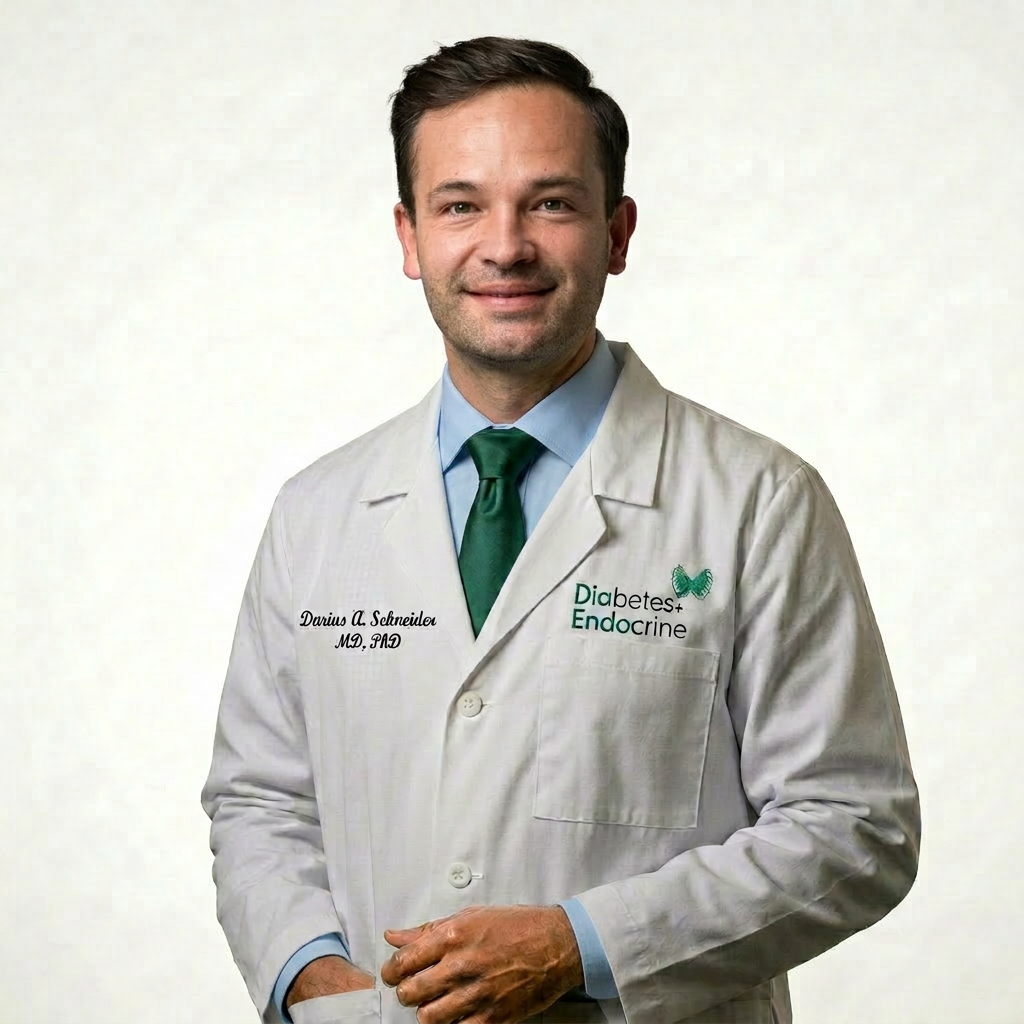
Darius A. Schneider, MD, PhD
Physician-scientist in interventional and general endocrinology, including office-based thyroid radiofrequency ablation. He authors and maintains this osteoporosis resource.
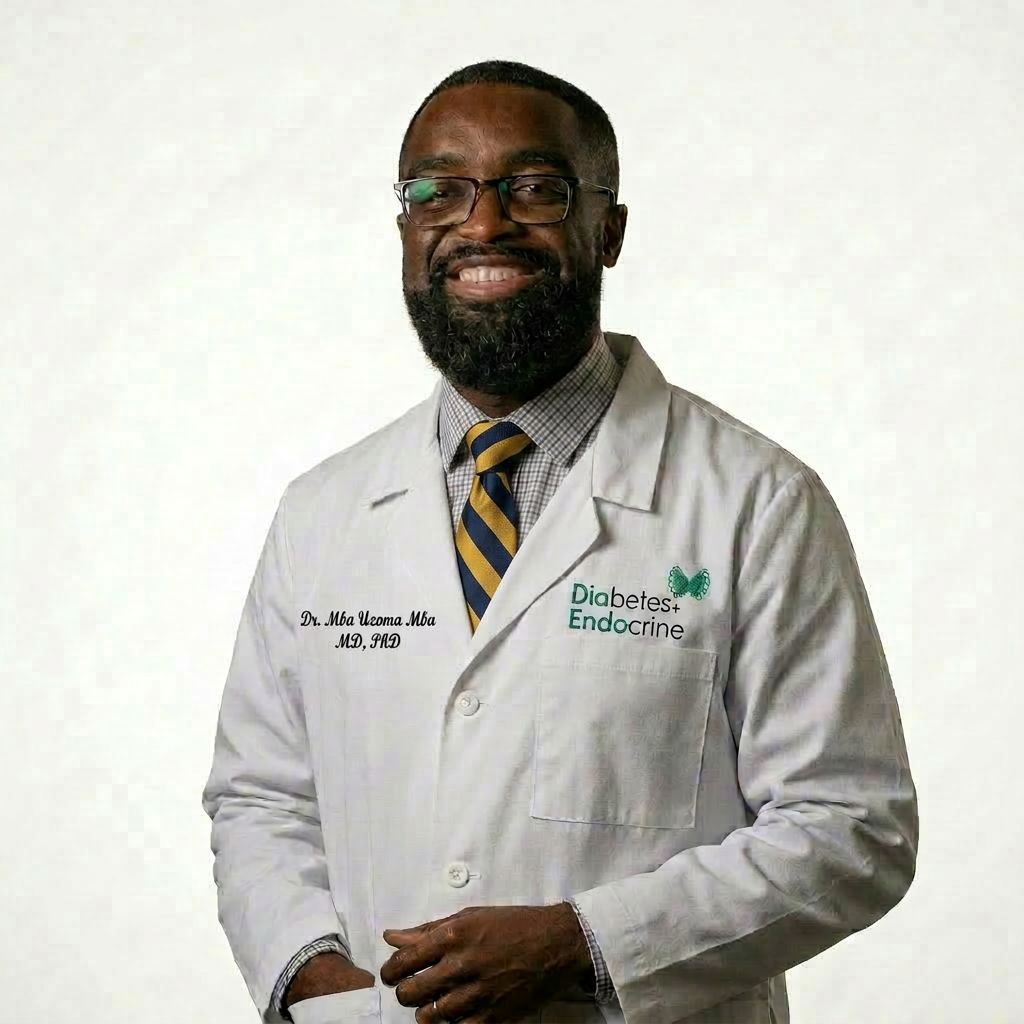
Mba Uzoma Mba, MD, PhD
Endocrinologist caring for patients across the practice's San Diego offices, with a focus on evidence-based management of endocrine and metabolic bone disease.
Three offices, one standard of care.
Osteoporosis care is provided by Diabetes & Endocrine Specialists Medical Group.
Ready for bone care that takes fracture prevention seriously?
Board-certified endocrinologists. Physician-scientists. Straight answers about what builds bone and what does not.